| Accueil | | Actualités |
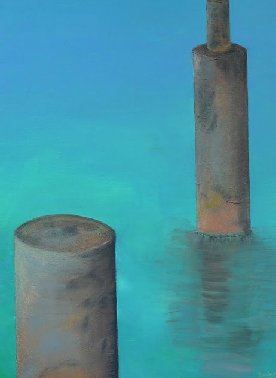
Le texte explicatif associé à chacun des quatre critères analysés (A - formalisme, B - matérialité, C - investissement, D - communication) positionne l‘oeuvre de l‘artiste dans l‘histoire de l‘art en rappelant éventuellement les courants artistiques auxquels elle se rattache, ou les noms des artistes illustres s‘étant exprimés dans une approche voisine. A : FORMALISME Le premier critère porte sur le formalisme de l'oeuvre : que voit-on quand on regarde une oeuvre, quel type de formalisation se donne à voir de prime abord ? Est-ce plutôt abstrait, plutôt figuratif, plutôt..., etc (classé du plus "abstrait" au plus "réaliste").? A180 : Abstrait non construit / "Informel", matières / taches A190 : Abstrait non construit / "Informel", mixte entre matière, tache et gestuel A240 : Allusif, inclusion de figures (ou d'objets réels) dans l'abstrait B : MATERIALITE Le second critère porte sur la matérialité de ce qui est donné à voir. S'agit-il de pur concept, de jeu de matières, d'objet détourné etc. (classé du plus "immatériel" au plus "réel") ? B140 : en matérialité non structurée avec prééminence des couleurs B150 : en matérialité non structurée avec prééminence des matières B180 : en matérialité matérialité mixte : structurée / non structurée C : INVESTISSEMENT CORPS / ESPRIT Le troisième critère porte sur « l'investissement » de l'artiste dans son oeuvre. Avec quel ratio Corps / Esprit, l'artiste s'investit-il dans son oeuvre ? Classé du plus "intellectuel" (p.ex. "l'Art Conceptuel", ...) au plus "physique" (p.ex. le "Body Art", ...). C120 : plus vers l'intellectualité / l'essence, travail intérieur axé plus vers le projectif D : COMMUNICATION Le quatrième critère porte sur l'aspect « communication » : L'artiste a t-il une volonté délibérée de communiquer à travers ses oeuvres un message quelconque ? (classé du plus "spiritualiste" au plus "sociétal"). D115 : via le signifié en narrations ou symboliques diverses qu'elles soient www.frederique-barlas.net |